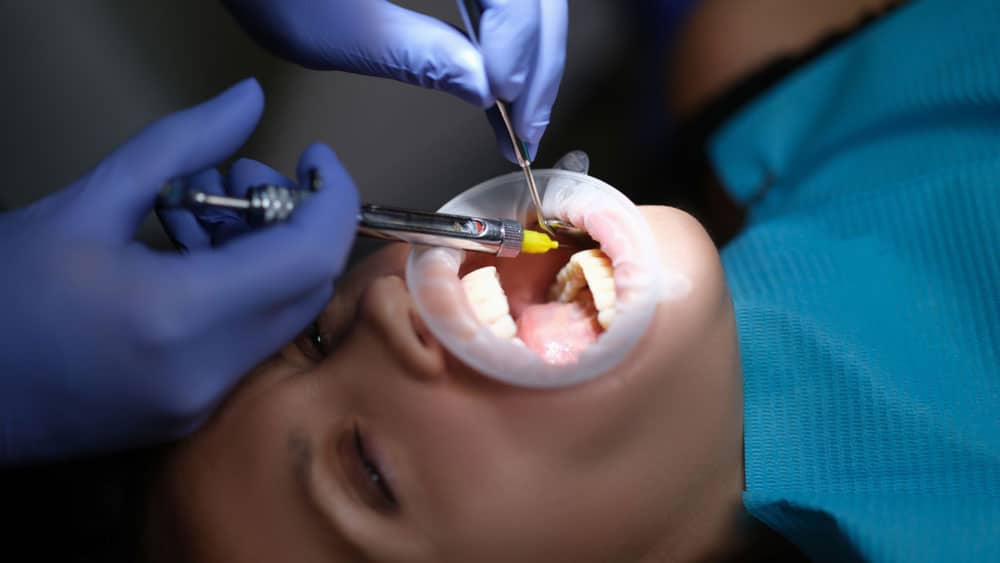
Local Anaesthesia

Local Anaesthesia

Most dental procedures at Charisma Dental can be done using local anaesthesia. 
A dental sealant is a thin coating placed on teeth to protect teeth from bacteria, preventing cavities.

Using Dental Sealants

Dental sealants are thin and unrecognizable by others. They are placed primarily on the back teeth where most chewing happens.
The purpose is to prevent bacteria from causing cavities and other problems on teeth by protecting teeth surface.

Composition of Sealants

Sealants can be made of one of four elements. Most are made from resin-based materials while other materials include glass ionomer cement, polyacid-modified resin, and resin-modified glass ionomers. Sealants can remain on your teeth for nine years so it’s a procedure that is not repeated often.

Using Sealants on Children

One of the biggest groups that sealants benefit is children. Sealants can be used either on baby teeth or permanent teeth on children to protect them through their growing years. One of the reasons for using sealants on children’s teeth is because it protects teeth for those who are more vulnerable to cavities either because it’s hard to brush back teeth or with other medical issues.

It's Painless

Schedule an exam and consultation today!

Putting a sealant on teeth is a painless process that can be done in a simple in-office procedure. It's one way those who need extra protection can protect their teeth. Our caring staff at Charisma Dental can explain more about sealants to you.

Local Anaesthesia FAQs

How is local anaesthesia in dentistry?
Local anaesthesia is a medication we use to numb the part of the mouth where we will be doing some work. The patient doesn’t feel pain with this method.
How does Charisma Dental use local anaesthesia?
Charisma Dental starts by putting a topical on the area where we will apply the local anesthetic. We use a needle to inject the local anesthetic. The area will go numb after a few minutes.
What types of dental procedures use local anaesthesia?
Procedures that are invasive require local anaesthesia. That include deep cleanings, tooth extractions, fillings, and root canals.
Will I feel anything when local anaesthesia is used?
You will only feel pressure. You won’t feel pain. You may feel vibration when equipment is used.
Is the injection for local anaesthesia painful?
There is a brief pinch or sting but the pain is mild.
How long does the numbness last?
It depends on the amount of anesthetic we use. Most of the time, it lasts a couple of hours.
Are there risks or side effects associated with local anaesthesia?
Side effects are rare. Your lips or tongue can go numb. You may have some sensitivity to the area.
What should I do after receiving local anaesthesia?
You should avoid chewing or biting on the numb area until feeling returns, be careful with hot foods or beverages, and follow post-procedure instructions from your dentist.